

Secondo alcuni manoscritti del 1787, la costruzione del Castello risalirebbe già all’804, a opera del barone Antonio Caffo. Più probabilmente il Castello fu edificato nel XII sec. e fu dimora di molteplici feudatari: si susseguirono dal 1117 Albereda di Chiaromonte, signora di Colobraro e Policoro, moglie ripudiata di Roberto il Guiscardo; dal 1119 il Conte Bertaimo d’Andria che la donò a Ugone e Margherita, Conti di Chiaromonte; dal 1270 i signori Angioni Taxino de lovino e da questi passò a Eustachio de Jovenale da Colobraro; dal 1463 Roberto Sanseverino Principe di Salerno; dal 1562 Eleonora Comite.
Il Castello, come apprendiamo da Lorenzo Giustiniani, nel 1617 fu acquistato dalla potente famiglia dei Carafa della Stadera di Napoli con cui avrà una certa stabilità nel potere. Carlo Carafa sarà il primo a prendere il titolo di Principe di Colubrano, titolo che la famiglia ha sempre mantenuto. Dalla famiglia Carafa discende il noto musicista Michele Enrico CARAFA, collega coevo di Gioacchino Rossini.
Nel 1732 la terra di Colobraro passò alla famiglia dei Donnaperna, che ne furono marchesi fino all’unità d’Italia; poi il Castello passò ai Brancalasso di Tursi e venne abbandonato andando in decadenza.
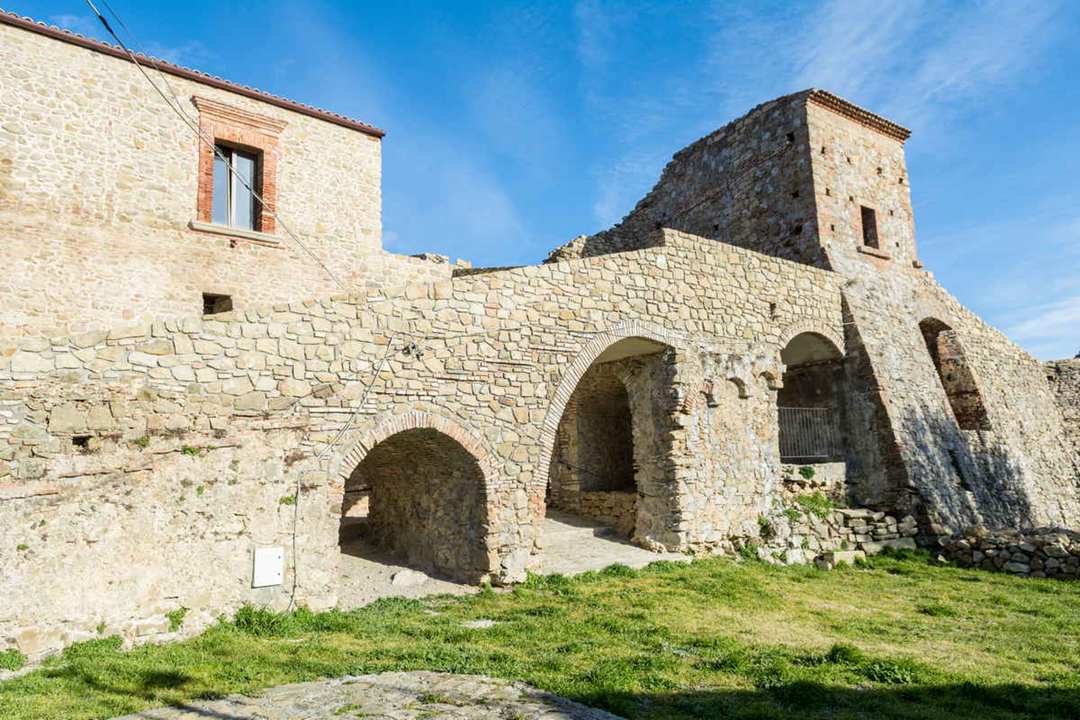
Il Castello è posto sul punto più alto del borgo ed è raggiungibile da percorsi ripidissimi che tagliano verticalmente il lato sudovest della collina, su cui è arroccato Colobraro. Sul lato nord-orientale, praticamente irraggiungibile, vi è un residuato delle mura di cinta, munite di feritoie. A nord è ancora visibile una torre angioina e spezzoni di muro che testimoniano la presenza di un ponte levatoio; presente e intatta anche la scalinata che conduce dal paese al Castello. L’antica e probabile torre quadrilatera è stata abbattuta e gli ambienti sono stati utilizzati come stalle e deposito delle abitazioni prospicienti il castello. Purtroppo, il maniero ridotto allo stato di rudere, anche per il terremoto del 1856, non ha dato la possibilità di compiere una ricostruzione attendibile riguardo alle sue origini. Le uniche notizie attendibili riguardano i dati relativi alla struttura esterna e interna prima dell’ampliamento del 1500 a opera dei Carafa forniti dal Bretagna: secondo questi nel Castello c’erano oltre quaranta vani al primo piano e grandi magazzini e atri al piano terra; successivamente con la costruzione di muraglioni si formò un altro piano per la costruzione di altre sei sale e di una grande scuderia. Una galleria sotterranea, oggi non più esistente, collegava il castello alla cappella gentilizia dell’Icona. Completava la bellezza architettonica dell’edificio il Palazzo della paggeria, residenza degli armigeri e degli scudieri (attuale Palazzo Fortunato).
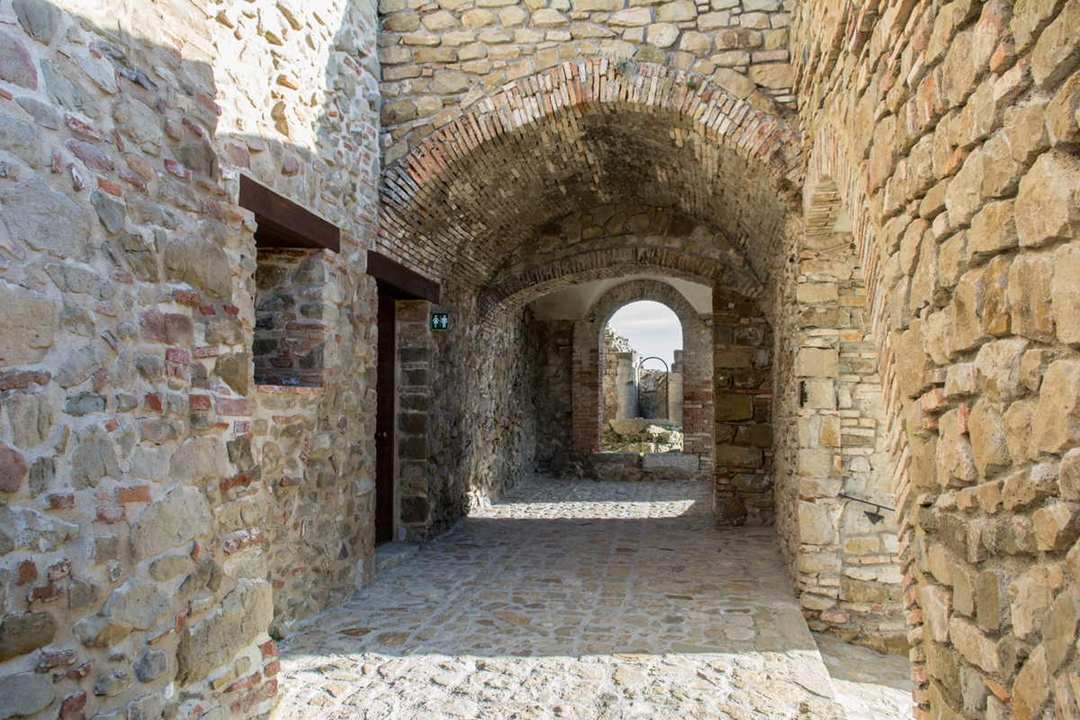
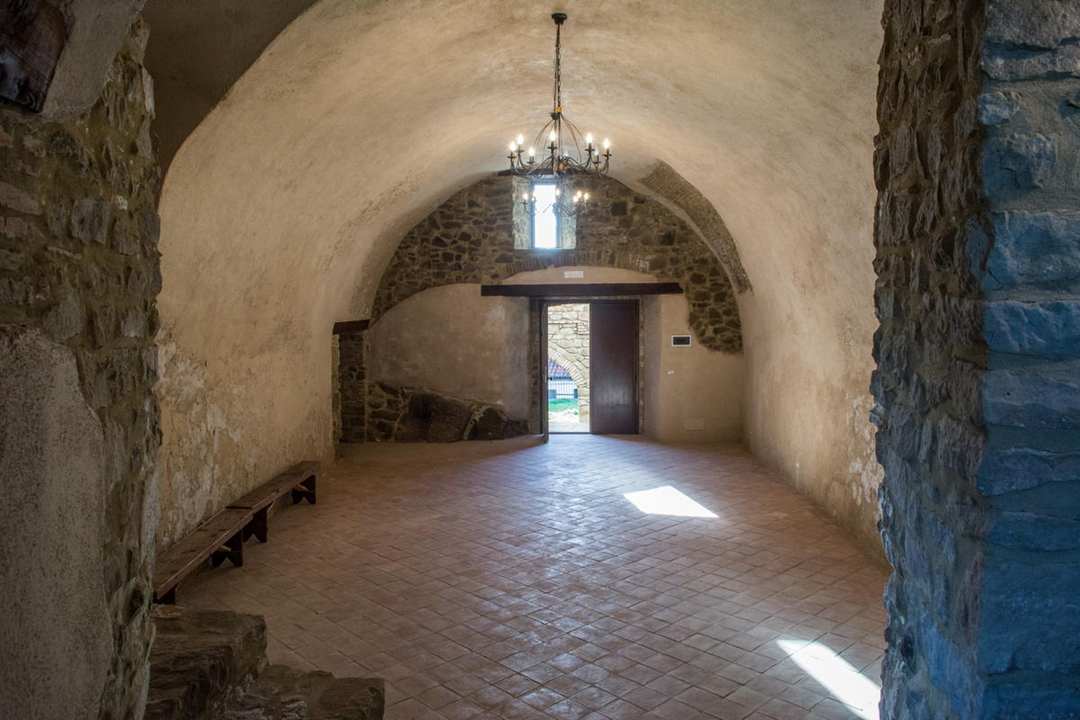
Il Castello tra il 2009 e il 2015, dopo 150 anni di totale incuria, ha ricevuto un importante restauro conservativo ed i primi recuperi funzionali.
Dal belvedere del Castello si gode un fantastico, magico e meraviglioso panorama: il Massiccio del Pollino, il Mar Jonio e il Golfo di Taranto, il lago di Monte Cotugno, le valli dei fiumi Sinni, Sarmento e Agri, i Calanchi di Colobraro e Tursi e tanto altro).
“U MONAKIKKJ” (Il Monachicchio)
Si narra che abitasse e abiti ancora i meandri del castello, il “monachicchio” è lo spirito buono di un bambino morto prima di ricevere il battesimo, un folletto dispettoso, irrequieto e bizzarro, che al calar della sera cerca di infilarsi nelle case per fare scherzi e dispetti di ogni genere. Immaginato dai più con un cappello rosso e vestito di abiti poveri, il monachicchio esaudirebbe qualsivoglia desiderio a colui chi riuscisse nell’impresa di togliergli il suo bel cappello rosso, persino svelandogli il sotterraneo del castello dove sarebbe custodito un tesoro.
Anche a coloro che visitano il centro storico potrà capitare di incontrarlo!
U Monakikkj, se lo incontrate, potrebbe sbeffeggiarvi con queste parole:
Gente, gente che per strada andate,
che volete? che cercate?
La gioia, la felicità? O l'amore, fortuna e danari?
Ecco, mi vedete e mi sentite.
Tutti appresso scappate
e questo rosso cappello di prendere sperate.
Ma se veramente fortunati volete essere
qualche cosa dovete capire:
sfortuna, malocchio e jella
nella testa stanno e oscurano la vita bella.
Anche se mi pigli e mi rubi il cappello, lo stesso,
ricordati, che il monachicchio con una pernacchia sempre ti fa fesso!
Based on some manuscripts of 1787, the construction of the castle dates back to 804 and was ordered by the Baron Antonio Caffo. Nevertheless, it is more likely that the castle was built in the 12th century and was governed by many feudatories: from 1117, Albereda of Chiaromonte, Lady of Colobraro and Policoro, the repudiated wife of Robert Guiscard; from 1119, the Count Bertaimo d'Andria, who donated it to Ugone and Margherita, Counts of Chiaromonte; from 1270, the Lords Angioni Taxino de lovino, who passed it to Eustachio de Jovenale of Colobraro; from 1463, Roberto Sanseverino, Prince of Salerno; from 1562, Eleonora Comite.
In 1617, as we learn from Lorenzo Giustiniani, the castle was bought by the powerful family of the Carafa della Stadera of Naples, who brought a period of stability. Carlo Carafa was the first one to take on the title of Prince of Colubrano, which his family maintained in time. A well-known descendant of the Carafa family was the musician Michele Enrico CARAFA, a contemporary of Gioacchino Rossini.
In 1732, the land of Colobraro passed to the Donnaperna family, marquises of this land until the unification of Italy. Afterwards, the castle passed to the Brancalasso family of Tursi who abandoned it, thus letting it fall in decay.
The castle is located on the highest point of the village and is reached by steep paths that vertically cut the southwest side of the hill on which Colobraro is perched. On the northeastern side, almost unattainable, there is a residual rampart with slits. On the northern side, an Angevin tower and wall parts are still visible, proving the former presence of a drawbridge. The staircase that from the village leads to the castle is still present and intact. The ancient and probably quadrilateral tower was demolished and its rooms were used as stables and storages for the houses facing the castle. Unfortunately, the manor was reduced to a ruin, also due to the 1856 earthquake, and did not allow for a reliable reconstruction of its origins. The only trustworthy news relates to the details about its external and internal structure before the 1500 enlargement ordered by the Carafa, reported by Bretagna: according to him, the castle had more than forty rooms on the first floor and large storehouses and entrances on the ground floor. Later on, with the construction of the walls, another floor was built to create other six halls and a large stable. An underground tunnel, now no longer existing, connected the castle to the Icon Chapel. The Palace of the pages, hosting the soldiers and the squires, completed the architectural beauty of the building (today called Fortunato Palace).
Between 2009 and 2015, after 150 years of total negligence, the castle underwent an important conservative restoration and the first works of functional recovery began.
From the lookout tower of the castle it is possible to enjoy a beautiful and magical panorama: the Pollino massif, the Ionian Sea and the Gulf of Taranto, the lake of Monte Cotugno, the valleys of the river Sinni, Sarmento and Agri, the badlands of Colobraro and Tursi and much more.
“U MONAKIKKJ” (The Monachicchio)
People say that he used to live, and still lives, somewhere in the Castle. The monachicchio is the good spirit of a child who died before receiving baptism; a mischievous, exuberant and bizarre sprite who, at nightfall, seeks to slip into houses to play tricks and jokes of all kinds. Imagined by most people wearing a red hat and dressed with poor clothes, the monachicchio would satisfy any desire of those who succeed in taking his red hat off, even revealing them the location of the Castle where he hides a treasure.
Even those who visit the old town might meet him!
If you meet u Monakikkj, he might mock you with these words:
Hey you, walking on these streets and floors
What do you want? What are you looking for?
Joy, happiness? Or love, fortune, and silver?
Here, me you listen to and see.
All of you running after me,
this red hat your purpose will be.
But if getting luck is your hope
Something you should understand to fulfill your scope:
Bad luck, evil eye and jinx
obscure the beautiful life and only in your head exist.
So remember, even if you catch me and my hat steal,
blowing a raspberry an idiot I will make you feel.
Territorio
 Convento e Chiesa
 Timpa della Rocca
 Palazzo delle Esposizioni
 Magia e Fascinazione
 Il Castello
Dove Dormire
Dove Mangiare
Numeri Utili
EMERGENZA
Numero Nazionale Emergenza 112
Soccorso Sanitario 118
Vigili del Fuoco 115
Carabinieri 0835 841010
UFFICIO POSTALE
Corso Umberto I n.109
75021 - Colobraro (MT)
+39098524412